CRM stands for Customer Relationship Management. The term has two close meanings: an approach that puts the customer at the centre of the business, and software that gathers and organises customer data from every contact channel (phone, website, messengers, social networks) so sales, marketing and support all see the same picture of the customer.
What is CRM for?
- Knowing the customer
- Each customer's behaviour and history is collected in one file.
- Keeping the customer
- Timely follow-up and after-sales service bring repeat purchases.
- Better selling
- Leads, quotes and follow-ups stay on one path from entry to invoice.
- Decision-making
- Live reports show where you sell and where you lose customers.
Four types of CRM
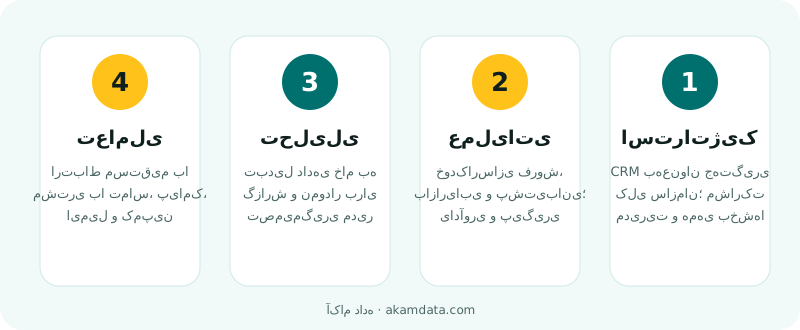
- Strategic: CRM as the organisation's overall direction; management and every department take part.
- Operational: automating daily sales, marketing and support work (such as follow-up reminders and invoicing).
- Analytical: turning raw data into reports and charts for decisions.
- Interactive: direct contact with the customer by phone, SMS, email and campaigns.
What makes good CRM software?
- It is easy to use and users accept it.
- It can be adapted to your company's process.
- It integrates with accounting, stock and sales.
- It manages workflows (such as quote approval).
- It is available on mobile too.
- It takes data security seriously.
Uses across departments
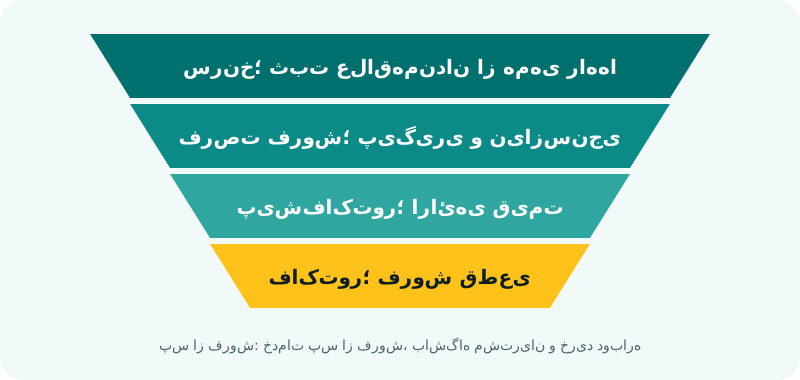
- Sales
- Managing leads, quotes, invoices, performance indicators and commission.
- Marketing
- Running targeted campaigns and tracking audience response.
- Loyalty
- Customer club, segmentation and after-sales service.
- Call centre
- Logging inbound and outbound calls with each customer's history.
- Office automation
- Replacing manual work with automatic rules and making each user's work transparent.
How to choose CRM software
- Write down your sales, marketing and support needs.
- Try a trial or demo.
- Make sure it integrates with your finance and stock software.
- Weigh support and training.
- Check the pricing model (by users, features and modules) and payment method.
CRM at Akam Data
Akam Data's customer management (CRM) system keeps the path from lead to invoice in one place, and in the ERP CRM module it is also tied to accounting, stock and sales. To see it in your own business get a demo or look at the training courses.